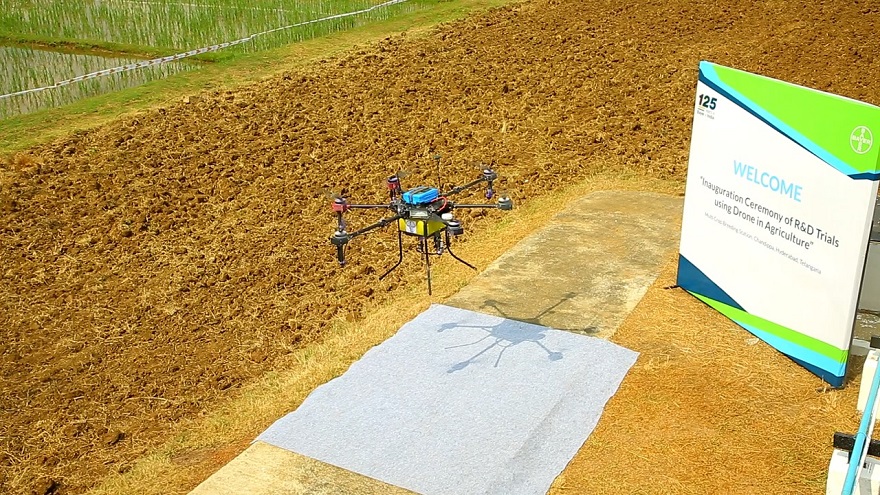
The Sky is the Limit: How Bayer Drones are Revolutionizing Indian Agriculture
For decades, Indian farmers have relied on manual knapsack sprayers.
It’s slow, water-intensive, and often leads to uneven chemical distribution. However, the introduction of Bayer’s Drone-as-a-Service (DaaS) model is bringing "Precision Agriculture" out of textbooks and directly into the fields of Punjab, Maharashtra, and beyond.
1. Precision Over Guesswork
Traditional spraying is often "blanket spraying"—you treat the whole field the same way. Bayer’s drones use advanced sensors and MagicScout AI integration to identify "hotspots."
*Targeted Application:If only one corner of your rice field is showing signs of Blast, the drone can be programmed to "spot spray" only that area.
Result: This can reduce chemical usage by nearly 20-40%, saving money and protecting the soil.
2. Speed:
30 Acres in an Hour
Time is the farmer's greatest enemy, especially during a sudden pest outbreak.
*Efficiency : A manual laborer might cover 1 or 2 acres a day. A Bayer-partnered drone can cover 20–30 acres in a single hour.
*Uniformity : Unlike human error where some rows get soaked and others are missed, drones use GPS-guided flight paths to ensure every leaf gets exactly the same dosage.
3. Saving Water in a Water-Stressed Nation
*One of the most unique benefits for the Indian context is water conservation.
*Manual spraying requires hundreds of liters of water to mix with pesticides.
*Bayer’s Ultra-Low Volume (ULV) spray technology uses fine droplets (150–300 microns) that stick better to leaves. This can save up to 90% of the water typically used in traditional methods.
4. Safety and Health
As someone who understands the importance of crop protection, you also know the risks of chemical exposure
*Zero Contact: Drones remove the farmer from the "spray zone." There is no more walking through wet, chemically-treated crops or inhaling pesticide drift.
*Safety First:The drones handle the hazardous work, while the farmer manages the operation from a safe distance via a smartphone or tablet.
5. Accessibility:
* No Need to "Buy" the Drone
The biggest innovation isn't the machine itself, but how farmers access it. Bayer has partnered with startups like *General Aeronautics to offer a "pay-per-acre" model.
*Farmers don't need to spend lakhs of rupees to own a drone.
They simply book the service—much like calling a taxi—and a certified pilot arrives to spray their field for a small fee (usually between ₹300–₹700 per acre).
SOURCE:Bayer Global